Revewd the ES Test
Finished male reproductive system
worked on questions
Double block.
We fineshed up the male reproductive system. I thought it was interesting how simple this system was. Also i find it very interesting that usually only one sperm will only be developed compared to the many million that are fighting there way to the overies. I have always wondered what has been the most babies born at one time?
The world record for a natural pregnancy (without fertility treatment) is held by an Argentinean woman, who was pregnant with 12 babies. Unfortunately, the pregnancy was lost before any of the babies were viable.
The official record for the most babies in a pregnancy (although not the most babies in one birth) was set in 1971, when an Italian woman on fertility treatment conceived 15 babies. None of the 10 girls or 5 boys survived to birth.
http://www.catalogs.com/info/bestof/the-most-babies-in-one-birth-famous-firsts-2
Cole Dichrow
Wednesday, October 13, 2010

Wednesday, May 19, 2010
Casie's extra late blog #3 May 19, 3/3
RECAP
- DNA fingerprinting
- DNA sequencing
- similarities and differences between each
- DNA ch 20 slideshow outlined learning objectives
- Polymerase Chain Reaction PCR
- amplification of a segment of DNA resulting in multiple copies
- animation/videos outlining PCR
- phylogentic tree and genetic variety
- DNA passing from mom only to offspring in cytoplasm of zygote outside the nucleus
- Lab exercise 20.B table 1
- review chapter 20 pg 700 and 705
The material we covered today is fairly abstract and so animations that we watched help for us to see what is happening at the molecular level in PCR. It is interesting to find out how our DNA is actually being read and how the codons of DNA are the sequences that differ from person to person. Applications of DNA use show how important and beneficial the genetic code is in the medical world. I feel like this unit is most in depth and therefore is harder to grasp at the concepts.
EXTRA
DNA sequencing and the HUMAN GENOME PROJECT
These tools include genetic maps, physical maps and DNA sequence - which is a detailed description of the order of the chemical building blocks, or bases, in a given stretch of DNA. Indeed, the monumental achievement of the HGP was its successful sequencing of the entire length of human DNA, also referred to as the human genome.
Scientists need to know the sequence of bases because it tells them the kind of genetic information that is carried in a particular segment of DNA. For example, they can use sequence information to determine which stretches of DNA contain genes, as well as to analyze those genes for changes in sequence, called mutations, that may cause disease.
Although providing a single reference sequence of the human genome is an extraordinary achievement, further advances in sequencing technology are necessary so large amounts of DNA can be manipulated and compared with other genomes quickly and cheaply. Comparing differences among long stretches of DNA - one million bases or more - taken from many individuals should yield an enormous amount of information about the role of inheritance in disease susceptibility, response to environmental influences and even evolution.
The Human Genome Project's (HGP) successful sequencing of the human genome has provided scientists with a virtual blueprint of the human being. However, this accomplishment should be viewed not as an end in itself, but rather as a starting point for even more exciting research. Armed with the human genome sequence, researchers are now trying to unravel some of biology's most complicated processes: how a baby develops from a single cell, how genes coordinate the functions of tissues and organs, how disease predisposition occurs and how the human brain works. http://www.genome.gov/10001177
These tools include genetic maps, physical maps and DNA sequence - which is a detailed description of the order of the chemical building blocks, or bases, in a given stretch of DNA. Indeed, the monumental achievement of the HGP was its successful sequencing of the entire length of human DNA, also referred to as the human genome.
Scientists need to know the sequence of bases because it tells them the kind of genetic information that is carried in a particular segment of DNA. For example, they can use sequence information to determine which stretches of DNA contain genes, as well as to analyze those genes for changes in sequence, called mutations, that may cause disease.
Although providing a single reference sequence of the human genome is an extraordinary achievement, further advances in sequencing technology are necessary so large amounts of DNA can be manipulated and compared with other genomes quickly and cheaply. Comparing differences among long stretches of DNA - one million bases or more - taken from many individuals should yield an enormous amount of information about the role of inheritance in disease susceptibility, response to environmental influences and even evolution.
The Human Genome Project's (HGP) successful sequencing of the human genome has provided scientists with a virtual blueprint of the human being. However, this accomplishment should be viewed not as an end in itself, but rather as a starting point for even more exciting research. Armed with the human genome sequence, researchers are now trying to unravel some of biology's most complicated processes: how a baby develops from a single cell, how genes coordinate the functions of tissues and organs, how disease predisposition occurs and how the human brain works. http://www.genome.gov/10001177
Friday, May 14, 2010
Kira Beukeboom Blog #3 May 11th 3/3
review of class:
- Recap on DNA replication
-Watched an animation on DNA replication
- did worksheet on DNA replication
Thoughts and opinion on material:
I think the DNA replication is very cool. the fact that scientists were able to understand how that all works when it happens on such a tiny level is amazing. I think so far it's difficult to understand some of the material and it will be tough to learn it, but once I get the hang of it it'll get easier. the concepts of messenger and transfer RNA is confusing so far. how fast exactly does DNA replicate itself?
Above and beyond:
The Genome of complex eukaryotes is huge and the process of DNA Replication should be incredibly fast. It is amazing that a Chromosome of 250 million pair of bases can be replicated in several hours. The speed of DNA replication for the humans is about 50 nucleotides per second per replication fork (low speed comparing to the speed of the bacterial DNA Replication).But the human Genome can be copied only in a few hours because because many replication forks take place at the some time (multiple initiation sites).
- Recap on DNA replication
-Watched an animation on DNA replication
- did worksheet on DNA replication
Thoughts and opinion on material:
I think the DNA replication is very cool. the fact that scientists were able to understand how that all works when it happens on such a tiny level is amazing. I think so far it's difficult to understand some of the material and it will be tough to learn it, but once I get the hang of it it'll get easier. the concepts of messenger and transfer RNA is confusing so far. how fast exactly does DNA replicate itself?
Above and beyond:
The Genome of complex eukaryotes is huge and the process of DNA Replication should be incredibly fast. It is amazing that a Chromosome of 250 million pair of bases can be replicated in several hours. The speed of DNA replication for the humans is about 50 nucleotides per second per replication fork (low speed comparing to the speed of the bacterial DNA Replication).But the human Genome can be copied only in a few hours because because many replication forks take place at the some time (multiple initiation sites).
Tuesday, May 4, 2010
Courtneys Replacment Blog Should be #3
What We Did Today:
~Mendilian Genetics written reponse section
~Chapter 19.1 and 19.2 quiz on thurs
~Started the DNA section
~Movie on Tay Sachs
Thoughts On The Material:
Today was a petty simple day. We wrote the written reponse and i thought i was simple, but then i realized i forgot alot of stuff so maybe it wasnt so easy. I still have to wrie the mumltiple choice which i hope goes well. We watched a little movie about a boy Hayden who has a rare disase called Tay Sachs. I didnt like that at all, i felt so bad for that little boy. While watching it i started to wondering how it could be only one letter that could affect someone soo greatly?
Above and Beyond:
This website http://en.wikipedia.org/wiki/Tay-Sachs_disease says that it is an autosomal esive trait. If only one gene is deformed, or mutated it can cause this. This gene is located on chromosome 15. So if that gene is wrong from both parents (since it is ressive) the child will have Tay Sachs. Both parents can carry it if they are heterozygous they can pass it on without having the disease.
~Mendilian Genetics written reponse section
~Chapter 19.1 and 19.2 quiz on thurs
~Started the DNA section
~Movie on Tay Sachs
Thoughts On The Material:
Today was a petty simple day. We wrote the written reponse and i thought i was simple, but then i realized i forgot alot of stuff so maybe it wasnt so easy. I still have to wrie the mumltiple choice which i hope goes well. We watched a little movie about a boy Hayden who has a rare disase called Tay Sachs. I didnt like that at all, i felt so bad for that little boy. While watching it i started to wondering how it could be only one letter that could affect someone soo greatly?
Above and Beyond:
This website http://en.wikipedia.org/wiki/Tay-Sachs_disease says that it is an autosomal esive trait. If only one gene is deformed, or mutated it can cause this. This gene is located on chromosome 15. So if that gene is wrong from both parents (since it is ressive) the child will have Tay Sachs. Both parents can carry it if they are heterozygous they can pass it on without having the disease.
Friday, April 30, 2010
Cher's replacement 2nd blog... April 30, 2010
What We Did Today:
~SNOW DAY
~Practice Unit Test
My Thoughts:
Well the buses were cancelled today, but here I am in biology. Today we did a practice unit test on Mendell genetics. I thought that this was very beneficial as it allowed me to know what position I was in regarding my knowledge of genetics. I think that the test showed us what we needed to further explore before the unit test next week. Even though I could be at home I thought that today's class wasnt so bad. I especially enjoyed jamin to the CKUA tunes. I feel that I am all the more prepared and hope that I can achieve a similar mark on the "real thing".
Above & Beyond:
So on our test it was talking in one question how horns in cows are recessive, but this isnt always neccesary true. In Highland cattle horns are dominant (well I was pretty sure of this anyways), so I checked it out to prove my point. At http://www.nwhca.org/highlands.htm I found out that pretty much every single Highland calf born is born with horns.... just thought this was kind of interesting.
~SNOW DAY
~Practice Unit Test
My Thoughts:
Well the buses were cancelled today, but here I am in biology. Today we did a practice unit test on Mendell genetics. I thought that this was very beneficial as it allowed me to know what position I was in regarding my knowledge of genetics. I think that the test showed us what we needed to further explore before the unit test next week. Even though I could be at home I thought that today's class wasnt so bad. I especially enjoyed jamin to the CKUA tunes. I feel that I am all the more prepared and hope that I can achieve a similar mark on the "real thing".
Above & Beyond:
So on our test it was talking in one question how horns in cows are recessive, but this isnt always neccesary true. In Highland cattle horns are dominant (well I was pretty sure of this anyways), so I checked it out to prove my point. At http://www.nwhca.org/highlands.htm I found out that pretty much every single Highland calf born is born with horns.... just thought this was kind of interesting.
Thursday, April 22, 2010
Sarah Milewicz, Blog 3, Tuesday April 20, 2010, 3/3
What we did in Class
- Wrote our Mitosis & Meiosis Unit Exam
- We just learned about Punnet Squares and they are pretty easy to use when looking for what kind off offspring two certain organisms breed. I think they're really useful and I thought it was cool that for Mendel's F1 generation for a monohybrid cross there was always a 3:1 ratio for the offspring and for a dihybrid cross it was always 9:3:3:1. It's interesting that he actually took the time to figure those things out (his life must have been pretty boring).
- In class today (April 22) we learned about lethal alleles and i was wondering how they actually occurred in the first place. I went the the website http://en.wikipedia.org/wiki/Lethal_alleles but i didn't find out why they occurred. I did find out that most lethal genes are recessive and recessive lethal alleles don't cause death in the heterozygous form because a certain threshold of protein output is maintained. In the homozygous form, the protein output doesn't meet that threshold and because of that, the organism dies. I found some other examples of lethal alleles and they are cystic fibrosis and brachydactyly. Cystic fibrosis is referred as the characteristic scarring and cyst formation within the pancreas, which causes progressive disability and often early death. Brachydactyly literally means "shortening of the fingers and toes." The shortness is related to the length of other long bones and other parts of the body.
Tuesday, April 20, 2010
Carrie Kibblewhite, Blog #3, April 19 2010, 3/3
What We Did Today...
- Punnett Squares
- Finished the simple worksheet
- Dihybrid Crosses
Thoughts About The Material...
I think the punnett squares are weird and kind of confusing, just doing the dihybrid crosses for simple genes. That got me wondering how complex a punnett square would be for trying to figure out the phynotype or genotype of a human, because we have so many complex traits, unlike the pea plants that had green or yellow seeds, human have many different characteristics.
Above and Beyond...
I followed this link http://faculty.clintoncc.suny.edu/faculty/Michael.Gregory/files/Bio%20101/Bio%20101%20Lectures/genetics-%20genes/Image1.gif
and didn't quite find an answer to my question but I did find a picture of what a trihybrid cross would look like, and it seems pretty complicated so it gives you an idea of just how complicated a human punnett square would be.
(I tried posting the picture but my computer wouldn't let me, sorry)
- Punnett Squares
- Finished the simple worksheet
- Dihybrid Crosses
Thoughts About The Material...
I think the punnett squares are weird and kind of confusing, just doing the dihybrid crosses for simple genes. That got me wondering how complex a punnett square would be for trying to figure out the phynotype or genotype of a human, because we have so many complex traits, unlike the pea plants that had green or yellow seeds, human have many different characteristics.
Above and Beyond...
I followed this link http://faculty.clintoncc.suny.edu/faculty/Michael.Gregory/files/Bio%20101/Bio%20101%20Lectures/genetics-%20genes/Image1.gif
and didn't quite find an answer to my question but I did find a picture of what a trihybrid cross would look like, and it seems pretty complicated so it gives you an idea of just how complicated a human punnett square would be.
(I tried posting the picture but my computer wouldn't let me, sorry)
Monday, April 19, 2010
Brock Groenewegen, Post #3, Completed April 19th 2010 for the class of Thursday April 15 2010, 3/3
Review of the Class:
- Wrote the Meiosis Section/Chapter Test
- Marked the test
Thoughts about the Material:
Additional Insight
I did some general research on meiosis nondisjunction, seeing as no intriguing questions emerged from the lack of conversation during the test, and I found some interesting animations about meiotic nondisjunction. They just outline what happens when meiosis goes wrong, but I found them quite to the point and efficient at explaining what happens. Follow the following links to view them:
Sunday, April 18, 2010
Aaron. Third Blog. Fri April,16 3/3
Reveiw of Class:
We have a Meiosis and Mitosis exam on Tues.
We started the next third of Unit 3. Classical Genetics.
Gregor Mendel developed and tested many theories on the inheritance of traits in pea plants.
Thoughts on Material:
It seems right now that idea of the limited amounts of vartiation make it simple to make predictions. The huge variety in humans though adds a whole other dimension to the work. It got me thinking about what traits would we see as dominant in ourselves. It's not as simple as short stem or tall stem but there must be some clear cut yes or no traits in humans.
Above and Beyond:
Brown eyes are dominant over every other colour, so is dark hair. Resistance to poison ivy is dominant, so is curly hair, and unatached ear lobes. It turned out that there were way more traits that could be compared as easily as a tall or short stem. Most of the traits I found were related to facial details, not weather you are tall or short like that. This was found at http://www.blinn.edu/
We have a Meiosis and Mitosis exam on Tues.
We started the next third of Unit 3. Classical Genetics.
Gregor Mendel developed and tested many theories on the inheritance of traits in pea plants.
Thoughts on Material:
It seems right now that idea of the limited amounts of vartiation make it simple to make predictions. The huge variety in humans though adds a whole other dimension to the work. It got me thinking about what traits would we see as dominant in ourselves. It's not as simple as short stem or tall stem but there must be some clear cut yes or no traits in humans.
Above and Beyond:
Brown eyes are dominant over every other colour, so is dark hair. Resistance to poison ivy is dominant, so is curly hair, and unatached ear lobes. It turned out that there were way more traits that could be compared as easily as a tall or short stem. Most of the traits I found were related to facial details, not weather you are tall or short like that. This was found at http://www.blinn.edu/
Tuesday, April 13, 2010
Meagan F-L, April 13 Blog #3, 3/3
Today in class we:
- Presented our Mitosis and Meiosis Candy Lab to Mr. Challoner
- Were assigned questions from the board, along with a practice question booklet and review questions from the textbook
About the material:
I think it's very convenient and efficient for meiosis to echo mitosis, in that the processes are the exact same. It's also very sensible and simple, so I'm surprised at how easily things can go wrong. When we learned about the ploidy number in cells, I wondered if there were different animals or types of living creatures that would have different ploidy numbers than humans.
Above and Beyond:
According to http://en.wikipedia.org/wiki/Ploidy, plants, amphibians, reptiles and insects tend to be polyploids more often than animals. Often within these organisma, they well be tetraploidy. This means that they have four copies of the chromosomes. In amphibians that are tetraploidy, they will act as if they are still diploidy. This is referred to as being amphiploids, which are allopolyploids that act as if they are diploids.
I would give myself 3/3 because I did the required work for each category (and had to look up and read about lots of big words to understand what exactly it was that I wrote in my "Above and Beyond")
Friday, April 9, 2010
Cher's supposed to third, but really it's only the second blog for the class of April 1, 2010
What We Did Today:
~ Mitosis Quiz
~ Read about abnormal Meiosis (Down Syndrome, Turner Syndrome, Klinefelter Syndrome)
~ Marked Mitosis Quiz
Thoughts About Today:
I thought that today was overall a pretty good class. I thought the quiz was extensive and really helped us students determine whether or not we knew the material, it was not too challenging though. I really liked reading about abnormal meiosis and being able to start to understand why things happen the way they do. It was a pretty slack class since it was the last day before break, but it was really good to go over what we had learned that week in the quiz. Making the quiz and going over the answers also was beneficial because it was fresh in our minds and we could understand our mistakes, etc.
Above And Beyond:
After reading about abnormal meiosis I was curious and wanted to what the chances of that happening was.
The chances of Down Syndrome: 1 in 800-1000 births
info from www.wikipedia.org/wiki/Down_syndrome
The chances of Turner Syndrome: 1 in 2000-2500 births
info from www.labcorp.com/genetics/index.html
The chances of Klinefelter Syndrome: 1 in 750 (male) births
info from www.antenataltesting.info/conditions/klinefelters/klinfelt_faq.html
~ Mitosis Quiz
~ Read about abnormal Meiosis (Down Syndrome, Turner Syndrome, Klinefelter Syndrome)
~ Marked Mitosis Quiz
Thoughts About Today:
I thought that today was overall a pretty good class. I thought the quiz was extensive and really helped us students determine whether or not we knew the material, it was not too challenging though. I really liked reading about abnormal meiosis and being able to start to understand why things happen the way they do. It was a pretty slack class since it was the last day before break, but it was really good to go over what we had learned that week in the quiz. Making the quiz and going over the answers also was beneficial because it was fresh in our minds and we could understand our mistakes, etc.
Above And Beyond:
After reading about abnormal meiosis I was curious and wanted to what the chances of that happening was.
The chances of Down Syndrome: 1 in 800-1000 births
info from www.wikipedia.org/wiki/Down_syndrome
The chances of Turner Syndrome: 1 in 2000-2500 births
info from www.labcorp.com/genetics/index.html
The chances of Klinefelter Syndrome: 1 in 750 (male) births
info from www.antenataltesting.info/conditions/klinefelters/klinfelt_faq.html
Tuesday, March 30, 2010
Micaiah Achtymichuk’s 3rd blog: Tuesday; March 30, 2010 3/3.
What we did today: in today’s class we…
- Did a pop quiz on the cell cycle.
- Discussed the yesterday homework questions.
- Talked about mitosis technology- cloning/ in vitro fertilization.
- Labeled microphotographs of cell division,
- Read and discussed cell aging (pages: 562- 563 and 570.)
- Drew a stick figure diagram of IVF vs. Cloning.
- Finished the day with an assignment on the cell cycle and cancer cells.
- (Onion root tip assignment can be found here: http://www.biology.arizona.edu/cell_bio/activities/cell_cycle/cell_cycle.htm)
(IVF & Cloning diagram)

Thoughts about the material:
I found the Section on the cell clock very interesting, and I attempted to find more information on this Mechanism.
Above and beyond:
On my quest to find answers to my question I was side tracked by an interesting article about the connection between circadian rhythm (a roughly 24-hour cycle in the biochemical, physiological or behavioral processes of living entities) and cell division within organisms, so I posted it instead. The study focused on Bacteria.
"We looked at how the biological clock controls when bacterial cells divide -- in bacteria, there's a period of four hours where the cells are not allowed to divide -- and we identified the structural changes in a key protein that controls this action."
The scientists probed cell division in the cyanobacterium Synechococcus elongatus.
“They found that the timing of cell division, patterns of gene expression and compaction of the chromosome are controlled by the circadian clock. What was unknown was precisely how the circadian clock in bacteria controlled cell division. Using time-lapse microscopy, Golden and her colleagues discovered that the clock proteins KaiA, KaiB, and KaiC in bacteria control the action of a key protein called FtsZ, preventing it from going to the middle of the cell and forming a ring necessary for cell division. After four hours has elapsed, the clock proteins allow FtsZ to move toward the center of the cell and change structurally to form this ring.
"This complex of proteins is at the heart of the bacterial clock controlling cell division," said Golden. "There are two cycles, the cell cycle and the circadian cycle, that need to mesh for organisms to function. What we learned from this study is how these two cycles with different timing periods interact, and that the mechanisms that control the timing of cell division in bacteria are different than they are in eukaryotic cells."
Golden added that knowledge of the mechanisms of how organisms from bacteria to humans control the timing of their cell division and other processes has application to many human problems resulting from disorders in the circadian clock.
Sarah M. Blog #2 Wed. March 25, 2010 3/3
What we did today
About the material
It's very interesting to learn about all of the stages that an embryo goes through in order to become a fetus. It's also interesting to know all of the things that can go wrong, like cleft pallets and spina bifida. It's a bit of a miracle that an egg gets fertilized by a sperm, that the egg attaches to the right spot in a woman's body and then that the baby is born without problems, because a lot of things can go wrong. It's amazing to know that most of the development happens within the first three months and after that its just fine tuning and getting bigger. There are many questions associated with this unit and one i was wondering what causes a woman to have a C-section.
Above and Beyond
I went to the website http://www.marchofdimes.com/pnhec/240_1031.asp and found out that there are many reasons why a woman might require a C-section instead of a normal birth. Some of the reasons include:
- Wrote our reproductive system unit test (yay for babies)
- Will write the written response on friday
About the material
It's very interesting to learn about all of the stages that an embryo goes through in order to become a fetus. It's also interesting to know all of the things that can go wrong, like cleft pallets and spina bifida. It's a bit of a miracle that an egg gets fertilized by a sperm, that the egg attaches to the right spot in a woman's body and then that the baby is born without problems, because a lot of things can go wrong. It's amazing to know that most of the development happens within the first three months and after that its just fine tuning and getting bigger. There are many questions associated with this unit and one i was wondering what causes a woman to have a C-section.
Above and Beyond
I went to the website http://www.marchofdimes.com/pnhec/240_1031.asp and found out that there are many reasons why a woman might require a C-section instead of a normal birth. Some of the reasons include:
- The woman has already had a c-section in another pregnancy or other surgeries on her uterus.
- The baby is too big to pass safely through the vagina.
- The baby's buttocks or feet enter the birth canal first, instead of the head. This is called a breech position.
- The baby's shoulder enters the birth canal first, instead of the head. This is called a transverse position.
- There are problems with the placenta. Placental problems can cause dangerous bleeding during vaginal birth.
- Labor is too slow or stops.
- The baby's umbilical cord slips into the vagina, where it could be squeezed or flattened during vaginal delivery
- The woman has an infection like HIV or genital herpes.
- The woman is having twins, triplets or more.
- The baby has problems during labor that show it is under stress, such as a slow heart rate
- The woman has a serious medical condition that requires intensive or emergency treatment (such as diabetes or high blood pressure).
- The baby has a certain type of birth defect.
Friday, March 26, 2010
Aaron. Second blog. Tues, March 23 3/3
Class Reveiw:
Block 1:
Quiz on reproductive technology
Most of the class was a type of lab in wich we checked out many different contraceptives.
We ID them found how each works and there relative effectivness. (some crazy stuff)
Block 2:
We got time to work on test tickets
we watched THE birth movie in all its glory.
Thoughts on Material:
The most effective contraceptives seemed to be the hormonal ones like the pill or the shot. There also seemed to be a lot of variables involved as to if you used them properly. For this reason I think the ones that people can't mess up on like a shot or ring are the most reliable. Since the idea has come up in class before i thot id also check out if I could find any examples or results from men on birth control.
Above and Beyond:
The stats comparing all of the technologies were the same as what we thought. The most common by far was the pill for usage. Technologies like the uterine T implant, implant, and shot were the most effective for the reasons I mentioned above. They didnt leave room for human error. Every type boasted good stats when in perfect usage, the problem seemed to always be the people using them. I got this info at www.gutmatcher.org/pubs/fb_contr_use.html .
The second question's search took me to some odd places if you will and I didnt want to keep searching. The most I got was that it would have similar effects as if a female took steroids, just reversed.
Block 1:
Quiz on reproductive technology
Most of the class was a type of lab in wich we checked out many different contraceptives.
We ID them found how each works and there relative effectivness. (some crazy stuff)
Block 2:
We got time to work on test tickets
we watched THE birth movie in all its glory.
Thoughts on Material:
The most effective contraceptives seemed to be the hormonal ones like the pill or the shot. There also seemed to be a lot of variables involved as to if you used them properly. For this reason I think the ones that people can't mess up on like a shot or ring are the most reliable. Since the idea has come up in class before i thot id also check out if I could find any examples or results from men on birth control.
Above and Beyond:
The stats comparing all of the technologies were the same as what we thought. The most common by far was the pill for usage. Technologies like the uterine T implant, implant, and shot were the most effective for the reasons I mentioned above. They didnt leave room for human error. Every type boasted good stats when in perfect usage, the problem seemed to always be the people using them. I got this info at www.gutmatcher.org/pubs/fb_contr_use.html .
The second question's search took me to some odd places if you will and I didnt want to keep searching. The most I got was that it would have similar effects as if a female took steroids, just reversed.
Thursday, March 25, 2010
Carrie Kibblewhite, Blog #2, March 24 2010, 3/3
What we did today...
- Wrote a brief quiz
- Finished the scary movie
- Got some study questions handing out
Thoughts About The Material...
I didn't know that humans have one of the most dangerous births, I thought that ours would be the safest because we are always surrounded by doctors and such. It doesn't make sense that human babies have the biggest head but the mother has a smaller pelvis, you would think that evolution would have fixed that over time. This got me wondering, just how many high risk pregnancies are there in a year?
Above and Beyond...
I followed this site https://merck.com/mmpe/sec18/ch262/ch262a.html and found these statistics,
- Perinatal mortality rate in offspring is 11.5/1000
- Deliveries: 6.7/1000 are fetal
- 4.8/1000 are neonatal (age < 28 days)
The most common causes of death are congenital malformations and preterm delivery.
- Wrote a brief quiz
- Finished the scary movie
- Got some study questions handing out
Thoughts About The Material...
I didn't know that humans have one of the most dangerous births, I thought that ours would be the safest because we are always surrounded by doctors and such. It doesn't make sense that human babies have the biggest head but the mother has a smaller pelvis, you would think that evolution would have fixed that over time. This got me wondering, just how many high risk pregnancies are there in a year?
Above and Beyond...
I followed this site https://merck.com/mmpe/sec18/ch262/ch262a.html and found these statistics,
- Perinatal mortality rate in offspring is 11.5/1000
- Deliveries: 6.7/1000 are fetal
- 4.8/1000 are neonatal (age < 28 days)
The most common causes of death are congenital malformations and preterm delivery.
Monday, March 22, 2010
Brock Groenewegen, Post #2, March 22 2010, 3/3
Review of the Class:
- Reviewed last semesters diploma marks
- Marked Investigation C & D questions
- Worked on practice diploma questions
- Discussed reproductive technologies from slide show
· Abortions
· In Vitro Fertilization
o Drawbacks of both
Thoughts about the Material:
I personally found this information quite dry and uninteresting, but I can understand the complexity of reproduction, pregnancy, birth and the various technologies involved with each. I can also understand how some things, like how the female body knows when to go into labour, when the baby is ready to come out, or what prevents the uterus from pushing the baby out before it is ready, are still an enigma to scientists today.
Additional Insight:
I did some follow up on the question posed above “how does the female body know when to go into labour,” and I could not find any information regarding said question, but I did find some interesting information on how to cause contractions to start. Several ways include; acupressure, herbs, and even nipple stimulation. To read more, follow http://howtoinducelabor.weebly.com/.
Meagan F-L, March 16, Blog #2, 3/3
Today in class we:
I think that it's really interesting that only a handful of hormones are responsible for the development and care of a baby, from embryo to fetus and finally to birth. The order of development was very interesting, especially in how the face devlops. Who knew that before we were born we had eyes on the side of our heads? (its just good that they aren't anymore...otherwise your mom really could say that she has eyes on the back of her head, or elsewhere). When learning about menstruation, a question rose up that questioning why women that are living in the same area will have their menstrual cycles line up (i'm sure that the guys who are stuck in a house full of women would like to know as well...haha). I wanted to know if there was a real explanation for why this happens.
Above and Beyond:
According to http://www.straightdope.com/columns/read/2429/does-menstrual-synchrony-really-exist , women's menstrual synchrony is believe to be caused by pheromones in the air that cause a hormonal cue in another woman through the sense of smell. Some scientists believe that this is not probable because every women's cycle can last for different periods of time. However, they can't ignore the fact that when women live together in groups there is a tendency for their cycles to synchronize. The latest argument is that they are caused by pheromones.
I believe that I am justified in recieving a 3/3 for this assignment because I did the required work for all three specified marking categories.
- Reviewed the worksheet we recieved yesterday
- reviewed the questions on page 529 that were assigned (4, 5, 7, 8)
- reviewed the hormonal control inquiry lab on page 527 (a-k) and took it in for marks
- we finished up the hormonal control portion of our studies
- we worked on the hormonal control flowchart that he handed to us
- we created a HOTFF chart on the hormones involved in pregnancy in the female body
- REMINDER: Female reproductive quiz tomorrow! (the 17th)
I think that it's really interesting that only a handful of hormones are responsible for the development and care of a baby, from embryo to fetus and finally to birth. The order of development was very interesting, especially in how the face devlops. Who knew that before we were born we had eyes on the side of our heads? (its just good that they aren't anymore...otherwise your mom really could say that she has eyes on the back of her head, or elsewhere). When learning about menstruation, a question rose up that questioning why women that are living in the same area will have their menstrual cycles line up (i'm sure that the guys who are stuck in a house full of women would like to know as well...haha). I wanted to know if there was a real explanation for why this happens.
Above and Beyond:
According to http://www.straightdope.com/columns/read/2429/does-menstrual-synchrony-really-exist , women's menstrual synchrony is believe to be caused by pheromones in the air that cause a hormonal cue in another woman through the sense of smell. Some scientists believe that this is not probable because every women's cycle can last for different periods of time. However, they can't ignore the fact that when women live together in groups there is a tendency for their cycles to synchronize. The latest argument is that they are caused by pheromones.
I believe that I am justified in recieving a 3/3 for this assignment because I did the required work for all three specified marking categories.
Sunday, March 21, 2010
Casie's #2, Thursday, March 18 3/3
Recap
While watching the slide show many questions come to mind on the many things that can go arye during pregnancy. One on which we touched on was FAS. This is a disorder that occurs when alcohol is consumed during pregnancy. Alcohol crosses the placential barrier and can stunt fetal growth, create distinctive facial stigmata, damage neurons and brain structure and cause other physical, mental, and behavioural issues. Surveys in the US show that up to 30% of pregnant women report having some amount of alcohol during pregnancy. This is a major issue in the western world, and is the #1 birth defect that can cause numerous forms of retardation, and yet it is preventable. The main effect of FAS is permanent central nervous system damage, especially to the brain. This creates an array of cognitive and functional disabilities including poor memory, attention deficiets, impulsive behaviour, and poor cause/effect reasoning. this is a major issue for our society in that so many complications in education, and integration into the work force take much more time, effort, and money that could be used in research or prevention of disorders that are not preventable. The best way to prevent this disorder from occuring at such high rates is education of the population in human reproduction, and pregnacy through courses such as ours, Bio 30. Until people realize the effect that they have on their babies is so great, there will likely be no change in the trend. No amount of consumption has been accepted as safe.
www.cps.ca/english/statements/fn/cps96
www.wickepedia.org/wiki/Fetal_alcohol_syndrome
- Slide Show of fetal devolopment, and some issues linked to pregnancy.
- most material we have covered about pregnacncy and development is awarness based as opossed to memory of parts and functions.
- Eye opener to see how majority of development occurs the first 9 weeks of development, and is very interesting to actually be able to see real photos of the progression of fetal development
- It is an important unit because it makes us more aware of the ethical issues involving reproduction and guides us toward having our own educated opinions of what we consider the beginning of life and what is classified as right vs wrong.
- I find it is a nice change from pure memorization, and encourages more critical thinking on our part.
While watching the slide show many questions come to mind on the many things that can go arye during pregnancy. One on which we touched on was FAS. This is a disorder that occurs when alcohol is consumed during pregnancy. Alcohol crosses the placential barrier and can stunt fetal growth, create distinctive facial stigmata, damage neurons and brain structure and cause other physical, mental, and behavioural issues. Surveys in the US show that up to 30% of pregnant women report having some amount of alcohol during pregnancy. This is a major issue in the western world, and is the #1 birth defect that can cause numerous forms of retardation, and yet it is preventable. The main effect of FAS is permanent central nervous system damage, especially to the brain. This creates an array of cognitive and functional disabilities including poor memory, attention deficiets, impulsive behaviour, and poor cause/effect reasoning. this is a major issue for our society in that so many complications in education, and integration into the work force take much more time, effort, and money that could be used in research or prevention of disorders that are not preventable. The best way to prevent this disorder from occuring at such high rates is education of the population in human reproduction, and pregnacy through courses such as ours, Bio 30. Until people realize the effect that they have on their babies is so great, there will likely be no change in the trend. No amount of consumption has been accepted as safe.
www.cps.ca/english/statements/fn/cps96
www.wickepedia.org/wiki/Fetal_alcohol_syndrome
Kira Beukeboom Blog #2 Thursday, March 11, 2010 3/3
overview of class:
-went over our endocrine system exam
-read an article about a fifteen year old girl who had no vagina but got pregnant when she was stabbed in the stomach
-we began reviewing the female reproductive system and wrote some notes on it
thoughts and opinions on material:
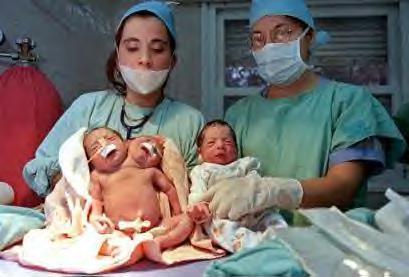
I think the reproductive system unit is amazing because its unreal how every one of us began as a single cell. the female body is incredible in its ability to concieve and grow a whole new human inside of it. i think it may be difficult to learn how all the different hormones cause the female reproductive system to do what it does but it'll be interesting. The reproductive system is an amazing thing and I would think it would be able to withstand lots of stresses but if there is to much stress on the female body will that prevent it from functioning properly or at all? has there ever been a case of conjoined triplets?
above and beyond:
Studies have shown that women with prolonged disorders like bulemia or anorexia can become sterile. When women starve themselves their menstral cycle eventually stops and if they do this for a long period of time they will eventual become sterile (http://www.freeessays.cc/db/39/pko90.shtml). In third world counties or generally where there has been famine there is often cases of women becoming sterile because of long lasting starvation. There has only been two recorded cases of conjoined triplets but others of triplets where only two of the three are conjoined:
-Unidentified (Sicily, Italy, 1834) 3 boys born with a single torso, two hearts, two stomachs, two lungs & three heads. The case was profiled in Gould & Pyle's Curiosities of Medicine.
-Unidentified (Samsun, Turkey, 1955?) Three heads, two pairs of arms, two pairs of legs; lived for 2 hours. On autopsy four lungs, three livers, three brains, two hearts and two kidneys were found. Information appeared in Sexology Magazine in 1955, they cited the Journal of the American Medical Association for the information.
-There have been 43 sets of triplets born with 2 conjoined. Only 6 of those sets have all three surviving, 17 sets I have no stats on, and the rest had one or both conjoined babies die.
http://www.skewsme.com/img/conjoinedbabies_b.jpg
-went over our endocrine system exam
-read an article about a fifteen year old girl who had no vagina but got pregnant when she was stabbed in the stomach
-we began reviewing the female reproductive system and wrote some notes on it
thoughts and opinions on material:
I think the reproductive system unit is amazing because its unreal how every one of us began as a single cell. the female body is incredible in its ability to concieve and grow a whole new human inside of it. i think it may be difficult to learn how all the different hormones cause the female reproductive system to do what it does but it'll be interesting. The reproductive system is an amazing thing and I would think it would be able to withstand lots of stresses but if there is to much stress on the female body will that prevent it from functioning properly or at all? has there ever been a case of conjoined triplets?
above and beyond:
Studies have shown that women with prolonged disorders like bulemia or anorexia can become sterile. When women starve themselves their menstral cycle eventually stops and if they do this for a long period of time they will eventual become sterile (http://www.freeessays.cc/db/39/pko90.shtml). In third world counties or generally where there has been famine there is often cases of women becoming sterile because of long lasting starvation. There has only been two recorded cases of conjoined triplets but others of triplets where only two of the three are conjoined:
-Unidentified (Sicily, Italy, 1834) 3 boys born with a single torso, two hearts, two stomachs, two lungs & three heads. The case was profiled in Gould & Pyle's Curiosities of Medicine.
-Unidentified (Samsun, Turkey, 1955?) Three heads, two pairs of arms, two pairs of legs; lived for 2 hours. On autopsy four lungs, three livers, three brains, two hearts and two kidneys were found. Information appeared in Sexology Magazine in 1955, they cited the Journal of the American Medical Association for the information.
-There have been 43 sets of triplets born with 2 conjoined. Only 6 of those sets have all three surviving, 17 sets I have no stats on, and the rest had one or both conjoined babies die.
http://www.skewsme.com/img/conjoinedbabies_b.jpg
Monday, March 15, 2010
Courtney Caines Blog #2 March 15 2010
Review of the Class:
- Male Reproductive System Quiz
- Recall of Oogenesis
-Talked about menstration
-Talked about Castor Semenya the track star who is a hermaphrodite
-Homework: pg 529 #4578
pg 527 a-k
Thoughts on the Material:
I enjoyed learning about this section. It is very interesting to know how the body does this whole thing to help humans procreate. We learned about menstration and how females get ready for pregnancy. Its fascinating what your body does and you dont even realize it. I was very interested in learning about Castor Semenya. She is a hermaphrodite. Her ovaries are actually testes. So she has never menstrated. How could that happen? What causes this to happen? Did she still keep her medals as a track star?
Above and Beyond:
Although i enjoyed the class today i was still very interested to know how Castor Semenya became a hermaphrodite. I still am not sure how that would happen. I used this website
http://rodonline.typepad.com/rodonline/2009/09/report-caster-semenya-intersex-internal-testes-and-no-ovaries.html this website talked about the fact that she had testes, and she also had no ovaries and no womb. i used this website
http://reproductivesystem.suite101.com/article.cfm/what_is_a_hermaphrodite to find out what a hermpharoite is. I hermaphrodite is some one with bothe male and female parts. this can occur from high levels of male hormones with a female fetus within the womb.
- Male Reproductive System Quiz
- Recall of Oogenesis
-Talked about menstration
-Talked about Castor Semenya the track star who is a hermaphrodite
-Homework: pg 529 #4578
pg 527 a-k
Thoughts on the Material:
I enjoyed learning about this section. It is very interesting to know how the body does this whole thing to help humans procreate. We learned about menstration and how females get ready for pregnancy. Its fascinating what your body does and you dont even realize it. I was very interested in learning about Castor Semenya. She is a hermaphrodite. Her ovaries are actually testes. So she has never menstrated. How could that happen? What causes this to happen? Did she still keep her medals as a track star?
Above and Beyond:
Although i enjoyed the class today i was still very interested to know how Castor Semenya became a hermaphrodite. I still am not sure how that would happen. I used this website
http://rodonline.typepad.com/rodonline/2009/09/report-caster-semenya-intersex-internal-testes-and-no-ovaries.html this website talked about the fact that she had testes, and she also had no ovaries and no womb. i used this website
http://reproductivesystem.suite101.com/article.cfm/what_is_a_hermaphrodite to find out what a hermpharoite is. I hermaphrodite is some one with bothe male and female parts. this can occur from high levels of male hormones with a female fetus within the womb.
Subscribe to:
Posts (Atom)